
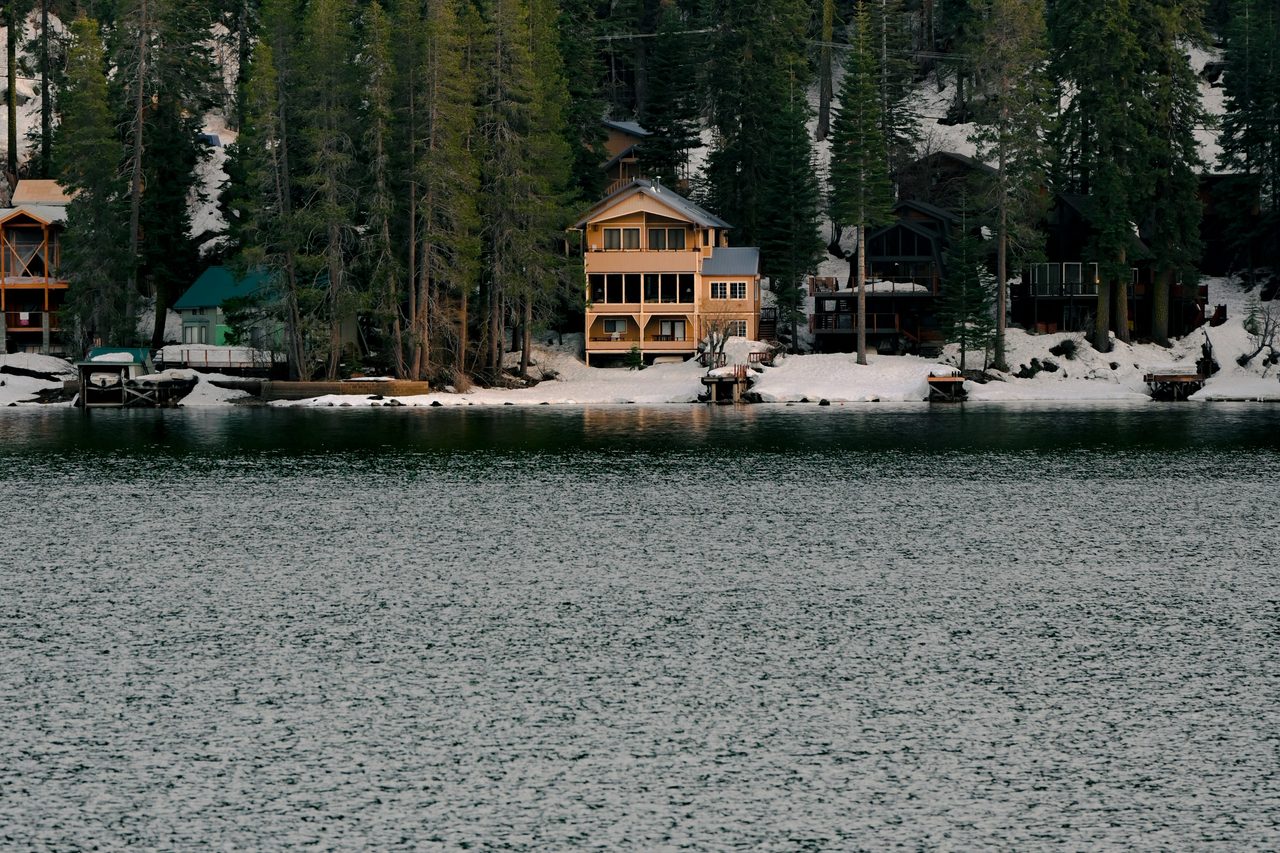
Snow-covered lakeside homes in Truckee, California illustrate regional winter exposure. They do not show a burst pipe or a provider job.
Use current conditions and local guidance
TMWA’s winterization guidance discusses preparing irrigation and vulnerable pipes before freezing weather. Weather and the actual installation determine risk. A calendar reminder cannot certify that every pipe is protected. Review the official guide and ask a qualified professional about any unfamiliar equipment.
Find vulnerable locations
Identify accessible pipes in unheated spaces, exterior faucets and irrigation connections. Record prior freeze failures and missing protection. Avoid entering dangerous spaces or blocking equipment ventilation. Different pipe layouts need different measures; general advice cannot specify a safe alteration to an unseen system. Use the A Reno hose bib drips after the hose is removed: repair before winterizing? for this specific decision.
Document the household shutoff
Learn the location of a familiar household shutoff before a leak occurs. Keep it accessible and let other adults know where it is. If the valve is seized, unfamiliar or on utility equipment, ask the responsible professional rather than forcing it. Safe isolation is preparation, not permission to modify the system.
Plan an absence carefully
Use TMWA’s current guidance and the equipment instructions when planning a winter absence. Ask how heating, water isolation and monitoring fit the actual home. Do not rely on a single measure while overlooking exposed plumbing or ventilation requirements. Arrange an appropriate contact if access becomes necessary.
Respond safely to a suspected freeze
Reduced flow during freezing conditions needs careful investigation. Do not thaw with an open flame. If a pipe has split or water begins arriving near electrical equipment, stay clear and seek appropriate help. Ask how the repair will address recurring exposure as well as the immediate failed section.
Make a cold-weather exposure inventory
- Exposure → unheated location
- Symptoms → fixture pattern
- Repair → recurrence plan
Worked example — hypothetical
Suppose the kitchen has normal flow but a fixture beside an unheated garage has little flow after a cold night. Report the difference and the exposed area. It may guide testing, but it does not confirm a frozen section or rule out another supply problem.
A record you can copy into your notes
| Location | Condition to record | Follow-up question |
|---|---|---|
| Exterior connection | Hose or seasonal equipment attached? | Which winterization applies to this installation? |
| Garage / crawlspace | Known unheated pipe route? | How will exposure be addressed safely? |
| Earlier repair | Date and recurring symptom | Does the scope treat the cause and failed section? |
Your call-preparation checklist
Use this list privately to organize your questions. This website does not collect your entries.
Local winter preparation
TMWA winter preparation guidance describes exposed-pipe concerns. Ask a qualified professional which preparation fits your actual installation.